
Hilton Netherlands Plaza in Cincinnati, OH
 1K+ Views
 100+ Likes
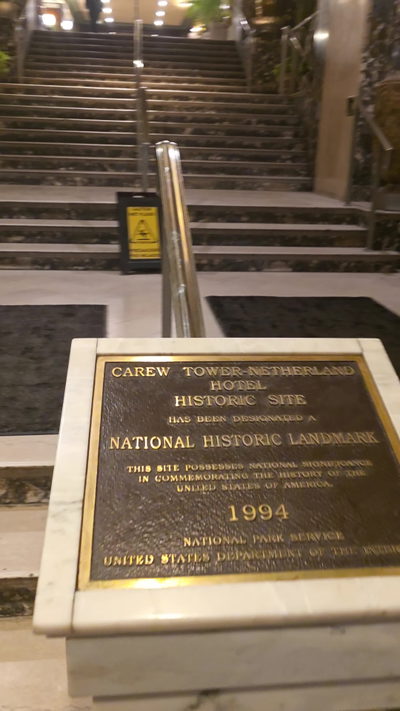
The video opens with a dynamic, forward-moving shot through the grand lobby of the Carew Tower Hotel, a National Historic Landmark located in the Netherlands. The camera glides past a prominent podium displaying official historical markers, including the designation 'U.S. DEPARTMENT OF THE INTERIOR, NATIONAL HISTORIC LANDMARK, 1994,' and 'CAREW TOWER HOTEL, NETHERLANDS HISTORIC SITE.' The focus then shifts to a sweeping view of a grand staircase leading upward, emphasizing the architectural elegance and historical significance of the space. The scene is accompanied by a sudden, urgent voice at 3 seconds: 'Ever! Ever! Get out of here!'—a sharp contrast to the serene, formal atmosphere, introducing a moment of tension or surprise. The video ends abruptly as the camera faces the staircase, leaving the viewer with a sense of unresolved narrative. The entire sequence is visually composed with steady, cinematic movement, suggesting intentional framing and production, though it lacks additional context or human interaction beyond the audio cue.
 1K+ Views100+ Likes
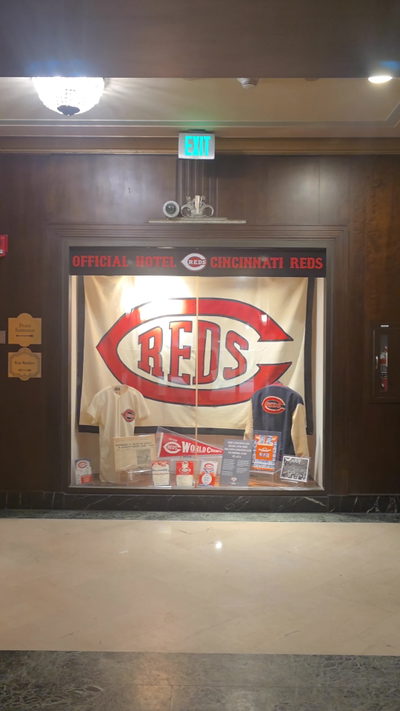
The video presents a curated visual journey through historical and cultural landmarks in Cincinnati, beginning with the entrance of a building featuring a revolving door and a sign reading 'Cincinnati Reds.' The camera then transitions into a vintage elevator with a metal door, followed by a close-up of a classic letter box. A hallway displays a case with Cincinnati Reds memorabilia, leading to a historical marker for the Garfield Tower Site. The scene continues with a vibrant mosaic tile wall, a long hallway with patterned carpet and wall sconces, and concludes with a grand interior space adorned with patterned carpet, tall columns, and chandeliers. The only spoken line, 'you,' occurs at 10–12 seconds, but it lacks context and appears disconnected from the visual narrative. The overall sequence suggests a guided tour of a historic venue, possibly a museum or cultural center, emphasizing architectural details and local heritage. The visuals are static and observational, with no human presence, actions, or clear visitor engagement, relying on atmospheric and aesthetic appeal rather than storytelling or interactivity.
 1K+ Views100+ Likes
The video presents a continuous, smooth panning tour of a modern hotel room, beginning with a view of two beds, a window with curtains, a lamp, and a wall painting. The camera moves rightward, revealing a television, dresser, chair, and suitcase. It continues to the desk area with a chair and a backpack, then shifts to the bathroom, showcasing a bathtub, sink, and mirror. The pan concludes with a wide shot of the city skyline at night, illuminated by lights. The only spoken words are brief, isolated utterances: 'so' at 00:06 and 'you' at 00:28, which appear to be fragments of a conversation, possibly from a guest or host. The visual narrative is entirely observational, with no human presence, actions, or contextual cues beyond the room's interior and the distant city view. The video lacks a clear narrative, emotional arc, or explicit invitation to engage with the space beyond passive viewing.
1K+ Views100+ LikesThe video opens with a dynamic, forward-moving shot through the grand lobby of the Carew Tower Hotel, a National Historic Landmark located in the Netherlands. The camera glides past a prominent podium displaying official historical markers, including the designation 'U.S. DEPARTMENT OF THE INTERIOR, NATIONAL HISTORIC LANDMARK, 1994,' and 'CAREW TOWER HOTEL, NETHERLANDS HISTORIC SITE.' The focus then shifts to a sweeping view of a grand staircase leading upward, emphasizing the architectural elegance and historical significance of the space. The scene is accompanied by a sudden, urgent voice at 3 seconds: 'Ever! Ever! Get out of here!'—a sharp contrast to the serene, formal atmosphere, introducing a moment of tension or surprise. The video ends abruptly as the camera faces the staircase, leaving the viewer with a sense of unresolved narrative. The entire sequence is visually composed with steady, cinematic movement, suggesting intentional framing and production, though it lacks additional context or human interaction beyond the audio cue.
1K+ Views100+ LikesThe video presents a curated visual journey through historical and cultural landmarks in Cincinnati, beginning with the entrance of a building featuring a revolving door and a sign reading 'Cincinnati Reds.' The camera then transitions into a vintage elevator with a metal door, followed by a close-up of a classic letter box. A hallway displays a case with Cincinnati Reds memorabilia, leading to a historical marker for the Garfield Tower Site. The scene continues with a vibrant mosaic tile wall, a long hallway with patterned carpet and wall sconces, and concludes with a grand interior space adorned with patterned carpet, tall columns, and chandeliers. The only spoken line, 'you,' occurs at 10–12 seconds, but it lacks context and appears disconnected from the visual narrative. The overall sequence suggests a guided tour of a historic venue, possibly a museum or cultural center, emphasizing architectural details and local heritage. The visuals are static and observational, with no human presence, actions, or clear visitor engagement, relying on atmospheric and aesthetic appeal rather than storytelling or interactivity.
1K+ Views100+ LikesThe video presents a continuous, smooth panning tour of a modern hotel room, beginning with a view of two beds, a window with curtains, a lamp, and a wall painting. The camera moves rightward, revealing a television, dresser, chair, and suitcase. It continues to the desk area with a chair and a backpack, then shifts to the bathroom, showcasing a bathtub, sink, and mirror. The pan concludes with a wide shot of the city skyline at night, illuminated by lights. The only spoken words are brief, isolated utterances: 'so' at 00:06 and 'you' at 00:28, which appear to be fragments of a conversation, possibly from a guest or host. The visual narrative is entirely observational, with no human presence, actions, or contextual cues beyond the room's interior and the distant city view. The video lacks a clear narrative, emotional arc, or explicit invitation to engage with the space beyond passive viewing.


